
The Ultimate Guide to Luxury Home Remodeling in Atlanta
High-end finishes, honest ROI numbers, realistic budgets, and the local design trends shaping premium renovations across metro Atlanta.
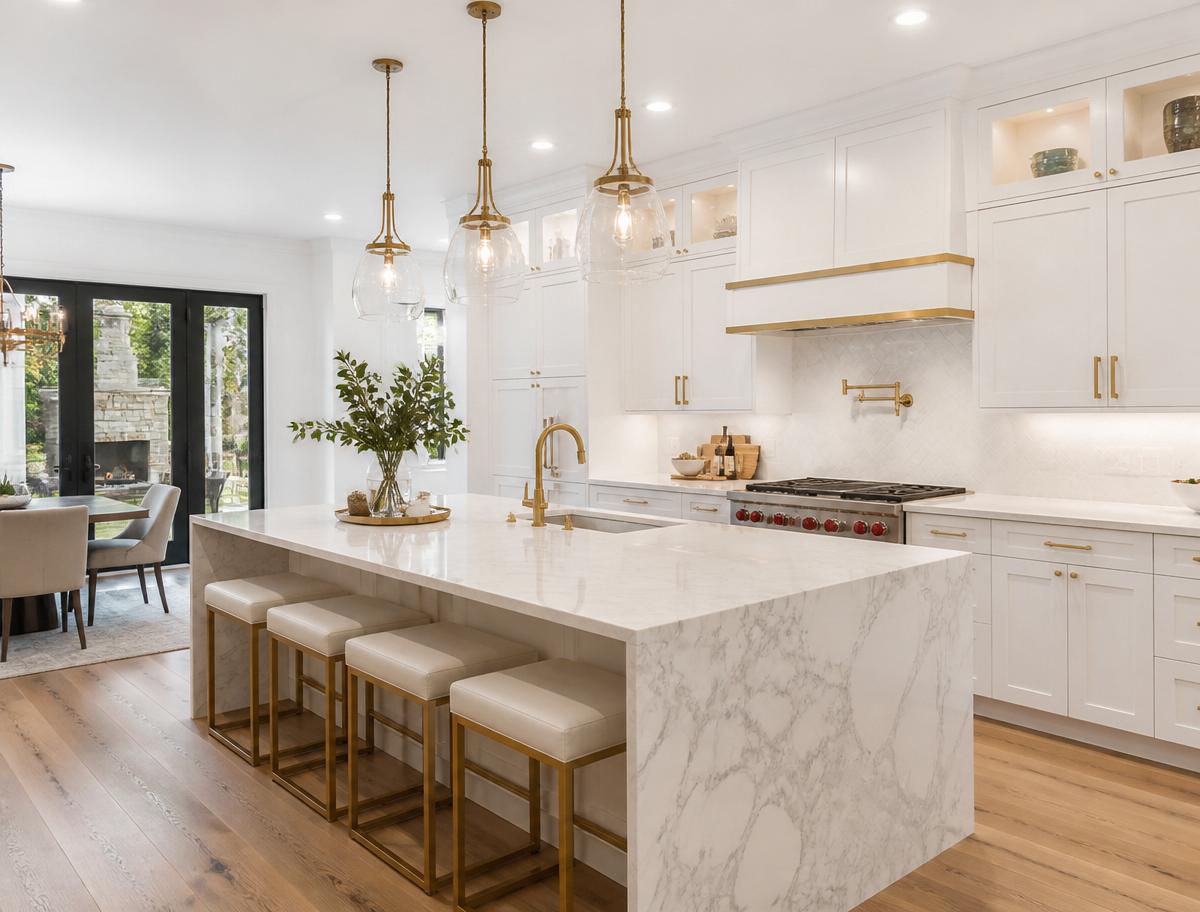
A luxury remodel in Atlanta is less about spending more and more about deciding well. This guide covers what separates premium work from ordinary work, which upgrades actually return their cost in this market, how budgets break down, and the design directions worth building around in 2026.
What actually makes a remodel “luxury” in Atlanta
Luxury is not a price tag — it is the absence of compromise. In a genuinely high-end remodel, every decision is made for longevity and proportion rather than for the lowest line item. That shows up in the parts of a home most people never photograph: framing corrections, waterproofing assemblies, dedicated circuits, sound isolation between floors, and HVAC that is balanced room by room.
Across Buckhead, Brookhaven, Sandy Springs, Alpharetta, and Marietta, the homes we work in are usually 1960s–1990s builds with excellent bones and dated systems. The premium tier of work is about bringing those systems up to modern standards while making the finishes feel like they were always there.
- Full-height, inset cabinetry built to the actual wall dimensions instead of stock filler panels
- Natural stone or engineered surfaces with book-matched veining across the run
- Layered lighting — ambient, task, and accent — on separate dimmable circuits
- Solid-core interior doors, upgraded hardware, and continuous trim detailing
- Waterproofing systems in wet areas that carry a manufacturer warranty
The real ROI of premium materials
Not every luxury upgrade returns the same value at resale, and being honest about that is part of the job. In the metro Atlanta market, kitchens and primary bathrooms consistently recover the largest share of their cost, while highly personalized additions recover the least — though they often deliver the most day-to-day enjoyment.
The pattern we see is simple: upgrades that improve how the whole house functions tend to hold value. Upgrades that reflect one owner's specific taste tend not to. The strongest strategy is a premium envelope — floors, lighting, millwork, windows — with personality expressed in items that can be changed later.
- Kitchen remodels: strongest overall return, especially when layout and storage improve, not just finishes
- Primary bathroom suites: high return when a cramped layout becomes a true spa plan
- Hardwood flooring continuity across the main level: consistently valued by Atlanta buyers
- Energy-efficient windows and doors: returns arrive both at resale and monthly on utility bills
- Exterior and siding refresh: the single fastest way to change a home's perceived tier
Budget ranges and where the money actually goes
Homeowners are often surprised by the split. In a high-end project, roughly half of the budget is labor and structural or mechanical work that will never be visible. That is exactly why bids that look dramatically cheaper usually are — the savings almost always come out of the parts of the project you cannot inspect after drywall goes up.
A useful planning rule for premium work in metro Atlanta: set your finish selections first, then hold a 10–15% contingency for what opens up behind the walls in an older home. Homes built before 1990 frequently reveal outdated wiring, undersized supply lines, or subfloor damage once demolition begins.
- Design, measurement, and selections: 5–10% of the total
- Demolition, framing corrections, and structural work: 15–20%
- Mechanical, electrical, and plumbing upgrades: 20–25%
- Cabinetry, stone, tile, and finish materials: 30–40%
- Contingency for concealed conditions: 10–15%
Atlanta design trends worth building around in 2026
Regional taste has moved decisively away from cool grey minimalism. The homes drawing the strongest reactions right now are warm, material-forward, and quieter — a reaction against the all-white kitchens that dominated the last decade.
The trends below have staying power because they are grounded in material quality rather than color cycles. Each one still reads well five years from now, which matters when a remodel is meant to last twenty.
- Warm woods — white oak, walnut, rift-sawn detailing — replacing painted-only cabinetry
- Honed and leathered stone finishes instead of high-gloss polish
- Statement plumbing and hardware in unlacquered brass and aged bronze
- Broken-plan living: defined rooms returning, but with wide cased openings rather than walls
- Screened porches and covered outdoor kitchens designed for Atlanta's long shoulder seasons
- Whole-home air quality work — including duct cleaning and filtration — treated as a finish-level upgrade
How a premium remodel should be run
The difference between a stressful remodel and a smooth one is almost never the materials. It is sequencing, communication, and having every selection locked before demolition begins. When selections lag behind the schedule, trades stack up, and a project that should take twelve weeks stretches to twenty.
Expect a detailed written scope, a fixed selection deadline, a single point of contact, and photo documentation at each phase. Ask specifically what happens when something unexpected is found behind a wall — the answer tells you more about a contractor than any portfolio.
- In-home consultation and measured assessment
- Design direction, material selections, and a fixed written scope
- Permitting and scheduling before any demolition
- Rough-in inspections at mechanical, electrical, and plumbing stages
- Finish installation, punch list walkthrough, and warranty documentation
Choosing the right contractor for high-end work
Luxury remodeling has a low tolerance for improvisation. The tradespeople who can execute an inset cabinetry run or a book-matched slab wall are a small subset of the market, and the best of them are booked by contractors who keep them busy year-round.
When comparing bids, compare scopes rather than totals. A bid that omits waterproofing membrane, electrical upgrades, or trim detailing will always win on price and lose on outcome.
- Licensed, insured, and able to produce recent Atlanta-area references
- Written scope that itemizes concealed work, not just finishes
- Clear change-order process with pricing agreed before work proceeds
- Warranty on labor in addition to manufacturer material warranties
Explore the services in this guide
Planning a premium renovation in metro Atlanta? Talk through your scope, budget range, and timeline with our team before you commit to selections.
Let's Bring Your Renovation Vision to Life
Request your free, no-obligation estimate today and discover why Metro Atlanta homeowners trust REN Specialists with their most important projects.